
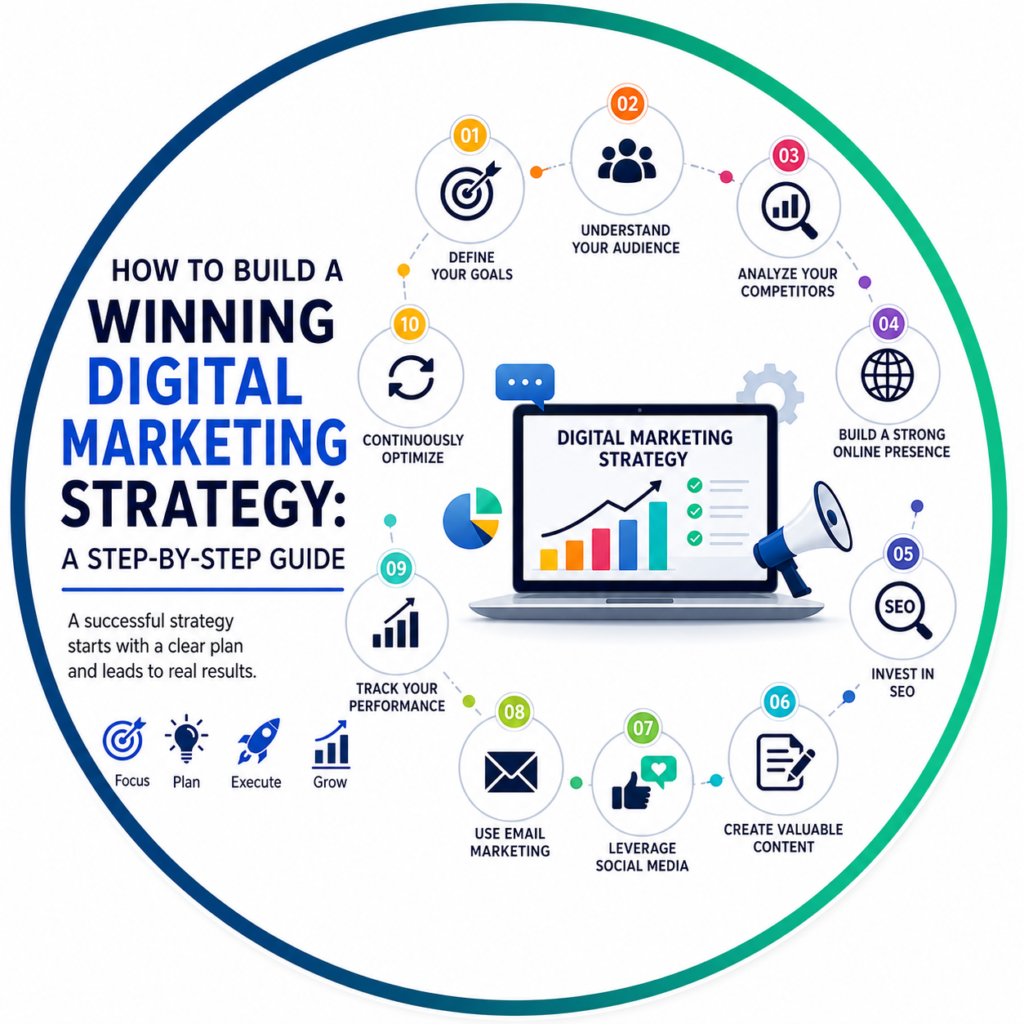
In the world we live in today having a website or being on media is not enough for businesses. They need a plan for digital marketing to reach the people they want to get good leads and grow in a way that lasts.
Whether you have just started a business you have a business or you have a big company having a clear plan helps you focus on what you need to do use your money wisely and see if what you are doing is working.
This guide will show you the steps to make a digital marketing plan that gets results.
What Is a Digital Marketing Plan?
A digital marketing plan is like a roadmap that shows how a business will use the internet to achieve its marketing and business goals.
The ways a business can do this include:
- Search Engine Optimization, which is also called SEO
- Content Marketing
- Social Media Marketing
- Email Marketing
- Pay-Per-Click or PPC Advertising
- Video Marketing
- Influencer Marketing
A good plan makes sure that the marketing efforts of a business are in line with its goals and that it is paying attention to the people it wants to reach.
Step 1: Define What You Want to Achieve
To make a plan you need to know what you want to get out of it.
Ask yourself these questions:
- Do you want more people to visit your website?
- Do you want to get leads?
- Do you want to sell things online?
- Do you want people to know more about your brand?
- Do you want to keep your customers happy?
Make sure your goals are specific you can measure them you can achieve them they are important. You can do them in a certain amount of time.
For example:
“I want to increase the number of people who visit my website from search engines by 30% in the six months.”
Step 2: Know Who Your Customers Are
To make a plan that works you need to know who your customers are.
Find out things like:
- How old they are
- If they are men or women
- Where they live
- What they do for work
- What they like to do
- How money they make
- How they behave online
- What problems they have
Make profiles of the people you think would be your customers.
For example:
Name: Sarah
Age: 30
Job: Owner of a business
Goal: Get more leads from the internet.
Problem: Does not have a lot of money to spend on marketing.
The more you know about your customers the better your marketing efforts will be.
Step 3: Look at What Your Competitors Are Doing
Look at what other businesses in your industry’re doing.
Check out:
- Their website
- How well they do in search engines
- How they use media
- The content they create
- The ads they pay for
- What their customers say about them
See what they are doing well where they’re weak and what you can do to be better than them.
Looking at what your competitorsre doing can give you good ideas without having to start from scratch.
Step 4: Make a Good Website
Your website is the base of your marketing efforts.
Make sure it is:
- Easy to use on a phone
- Fast
- Secure
- Easy to navigate
- Good for search engines
- Has calls to action
A good website turns visitors into customers.
Step 5: Invest in Search Engine Optimization
Search Engine Optimization or SEO helps your website show up in search engine results when people look for things like what you sell.
Focus on:
- Finding the keywords
- Making your website pages good for search engines
- Making your website fast and easy to use on a phone
- Creating content all the time
SEO is a good investment that will bring you traffic for a long time.
Step 6: Create Content That Is Valuable
Content is what makes marketing work.
Create things like:
- Blog posts
- Studies of cases
- Videos
- Infographics
- Tutorials
- News about your industry
- Frequently asked questions
content should:
- Solve problems
- Answer questions
- Teach people things
- Build trust
- Make people want to do something
Remember, people do not buy things they buy solutions to their problems.
Step 7: Choose the Right Marketing Channels
Not every platform is good for every business.
Choose the platforms where your customers spend their time.
Search engines are good for catching people who are looking for solutions.
Social media is good for talking to people making them aware of your brand and building a community.
Email marketing is good for taking care of leads and keeping customers.
Pay-Per-Click advertising gives you traffic away and targets the people you want to reach.
Video marketing is good for showing people your products and making them want to engage with you.
Focus on quality not on being
Step 8: Make an Email Marketing Plan
Email marketing is one of the ways to get a return on your investment.
Grow your email list by giving people things like:
- guides
- Discounts
- Checklists
- Newsletters
- Webinars
Send emails that give people value not try to sell them things.
For example:
- Educational content
- Updates about your products
- Stories of success
- Recommendations that are just for them
Step 9: Measure How You Are Doing
You cannot make things better if you do not know how you are doing.
Track things like:
- How many people visit your website
- How many people buy things from you
- How many people leave your website without doing anything
- How well you do in search engines
- How leads you get
- How many people open your emails
- How many people click on your ads
- How money you make from your marketing efforts
Looking at how you are doing regularly helps you see what is working and what is not.
Step 10: Keep Making Things Better
Digital marketing is not something you do once and forget about.
Look at your plan regularly.
- Update old content
- Try landing pages
- Make your ads better
- Refine your keywords
- Try formats for your content
- Listen to what your customers say
Making things better all the time keeps your business competitive.
Common Mistakes to Avoid
A lot of businesses have trouble because they:
- Do not pay attention to search engines
- Try to sell to everyone of a specific group of people
- Do not create content regularly
- Do not think about people who use their phones
- Only focus on selling things
- Do not look at how they’re doing
- Give up too soon
Avoiding these mistakes can make your marketing efforts much better.
Tools for Digital Marketing That We Recommend
Some tools include:
- Google Analytics
- Google Search Console
- Google Keyword Planner
- Canva
- SEMrush
- Ahrefs
- Mailchimp
- Buffer
- HubSpot
Choose tools that fit your business and what you can afford.
A good digital marketing plan is not something you can make overnight. It takes planning being consistent and always trying to make things better. By setting goals knowing who your customers are creating valuable content investing in search engines using the right marketing channels and looking at how you are doing you can make a plan that brings you growth that lasts.
Remember digital marketing is a long-term investment. Businesses that keep doing what they are doing adapt to changes. Focus on giving value to their customers are the ones that succeed in the long run.
Start with a plan do what you say you will do look at how you are doing and make things better over time. Every little improvement brings you closer, to being seen engaging with your customers and growing your business.